
TL; DR: In this blog, you will learn how a pedestrian accident claim under California law works. You’ll see who may be at fault, what money you can ask for, and how long you have to file.
One second, you’re crossing the street. Next, you’re lying on the hard asphalt. Now your body hurts, your phone won’t stop buzzing, and the bills keep piling up. Where do you even start? A pedestrian accident claim under California law can cover your bills and lost pay.
California drivers must watch out for people on foot. When they don’t, they can be held responsible. A claim can help cover hospital bills, missed work, and the pain you live with every day. Isn’t that the help you need while you heal?
At Matthew Blair, we hear the same worry from injured walkers. The insurance company calls early and sounds friendly. But is that adjuster really looking out for you? Most of the time, their goal is to pay as little as possible. So who pays, and how long do you have? Let’s break it down, one simple step at a time.
1. First, How Does California Protect Pedestrian Accident Victims?
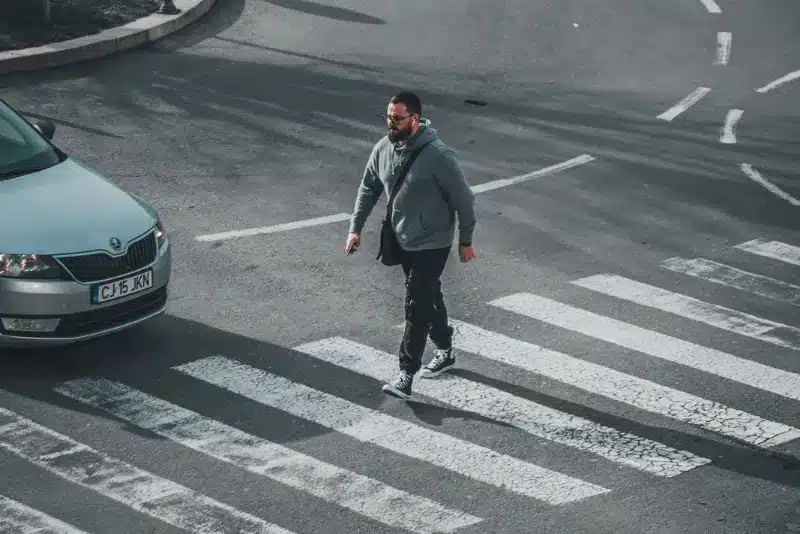
California has laws to help keep people walking safe. Under Vehicle Code 21950, drivers must yield to pedestrians in marked and unmarked crosswalks. This means drivers must watch for people crossing the street, even when there are no painted lines.
California law also requires pedestrians to follow traffic signals and use care when crossing the street. Even if you were crossing outside a crosswalk, the driver still had a duty to drive safely.
If a careless driver hits you while you are walking, you may have the right to seek money for your injuries and other losses. The driver’s actions, the facts of the crash, and the proof you have can all affect your claim.
Matthew Blair has helped injured people since 2011. He and his team can help pedestrian accident victims by looking into how the crash happened, gathering proof, dealing with insurance companies, and seeking money for medical bills, lost pay, and other losses. They also offer help in English and Spanish.
2. But Is the Driver Always at Fault?
Not always. In California, both the driver and the pedestrian may share blame for an accident. This is called “comparative fault.” Under this rule, you can still seek money for your injuries even if you were partly at fault. However, your payment may be lower.
For example, if you are found 20% at fault, your total award will be reduced by 20%. The California Supreme Court explained this rule in Li v. Yellow Cab Co., a case that helped establish how blame is shared under California law.
What if you were crossing outside a crosswalk? Under Vehicle Code 21954, pedestrians crossing outside a crosswalk must yield to cars that are so close they could cause an immediate danger. But this does not mean drivers can ignore pedestrians. Drivers must still use care to avoid hitting someone.
Insurance companies may try to blame you for the accident to lower your payment. But their decision is not the final word—the facts of the crash matter. For example, was the driver speeding, looking at a phone, or driving in poor lighting? Did the driver have enough time to stop?
Matthew Blair and his team can help pedestrian accident victims by looking into how the crash happened, gathering proof, and dealing with insurance companies. We also handle car accident claims and work to seek fair payment for medical bills, lost pay, and other losses. If you were hit while walking, a legal review can help you understand your rights and options.
3. Next, How Is Liability Decided in Crosswalk Accidents?
“Liability” means who is legally responsible for an accident. In a crosswalk accident, investigators look at what happened before the crash to decide who was at fault.
They usually check:
- The traffic signal: Did you have the “Walk” sign or a green light when you started crossing?
- The driver’s actions: Was the driver speeding, texting, turning, or running a red light?
- The right of way: Did the driver have to stop and let you cross?
- The road conditions: Was the crosswalk easy to see? Was the street dark or blocked?
- The proof: Are there traffic camera videos, photos, witness statements, or a police report?
For example, if a driver turns right without looking and hits you while you are crossing with the “Walk” sign, the driver may be at fault.
But every accident is different. The facts and proof help show who caused the crash and who may be legally responsible.
4. Now, How Does a Pedestrian Injury Claim Work?
A pedestrian injury claim is a request for money from the driver’s insurance company after a crash. The money can help cover your medical bills, lost pay, and other losses.
Most claims follow these steps:
- Get medical care: See a doctor right away and keep all medical records and bills.
- Get the police report: Ask for a copy of the report about the accident.
- Collect proof: Save photos, videos, witness names, and other evidence.
- Contact the insurance company: Report the accident, but be careful before giving a recorded statement.
- Send a demand letter: List your injuries, medical bills, lost pay, and other losses.
- Negotiate a settlement: Try to reach a fair agreement with the insurance company. If needed, you may file a lawsuit.
The insurance company may try to pay less than your claim is worth. Matthew Blair and his team can help gather proof, handle insurance calls, and seek fair payment for your injuries and losses. This allows you to focus on your health while your claim is being handled.
5. Then, How Much Compensation Can a Pedestrian Get?
“Compensation” means the money you may recover for your losses. There is no set amount, because every injury is different. Your claim may include:
- Medical bills: ER visits, surgery, therapy, and future care
- Lost income: Missed paychecks and lower future earnings
- Pain and suffering: Physical pain, stress, and lost enjoyment of life
The California Courts guide to personal injury cases explains that injured people may seek money for medical bills, lost wages, emotional harm, and other losses. The amount depends on the facts of the case, including the type of injury and how it affects your life.
We work to seek fair compensation for pedestrian accident victims, including money for medical care, lost pay, and pain and suffering. We also consider the care you may need in the future.
6. Finally, How Long Do You Have to File?
California has strict deadlines for filing a pedestrian accident claim. If you miss the deadline, you may lose your right to seek money for your injuries.
Here are the main deadlines:
- Two years: In most cases, you have two years from the date of your injury to file a lawsuit against the driver. (Code of Civil Procedure 335.1)
- Six months: If a city, county, or state agency is responsible, you may have only six months to file a written claim with that agency. (Government Code 911.2)
- Two years: In most cases, a wrongful death lawsuit must be filed within two years of the person’s death.
The six-month deadline can apply if a city bus, city truck, or unsafe public road played a part in your accident. Missing this deadline can make it much harder to seek money for your injuries.
If the driver left the scene, report the accident to the police as soon as possible. Your own uninsured motorist coverage may help pay for your losses, but special rules and deadlines may apply.
Matthew Blair and his team can help you understand which deadlines apply to your case, gather proof, and deal with insurance companies. Visit our practice area page to learn how we help injured pedestrians seek money for their losses.
We offer free case evaluation and are available 24/7. Contact us before an important deadline passes.
Frequently Asked Questions
Can I still file a claim if I was jaywalking?
Often, yes. California splits the blame, so your award may shrink, but it doesn’t have to disappear.
What if the driver had no insurance?
Your own uninsured motorist coverage may pay, even if you were walking. The driver’s employer may also be responsible.
Should I talk to the other driver’s insurance company?
Be careful, because adjusters work for their company, not for you. It’s fine to decline a recorded statement politely.
What if my pain showed up days later?
That’s common with head, neck, and back injuries. See a doctor right away. Late symptoms can still be part of your claim.
What does a free case evaluation cost?
Nothing at all. Most of our injury cases are handled on contingency, with no upfront fees.
Key Takeaways
- California drivers must yield to pedestrians in marked and unmarked crosswalks.
- A pedestrian can still seek money for injuries even if they were partly at fault. However, their payment may be lower.
- Liability depends on the facts of the crash, such as the driver’s actions, traffic signals, and available proof.
- A pedestrian injury claim may cover medical bills, lost income, pain, and other losses.
- In most cases, you have two years to file a personal injury lawsuit. Claims against government agencies may have a six-month deadline.
- Getting medical care, saving proof, and acting early can help protect your claim.
Don’t Let One Careless Driver Write the Rest of Your Story
Getting hit by a car while walking can leave you with painful injuries, medical bills, and lost pay. California law may allow you to seek money for these losses, even if you were partly at fault. But you must know your rights, gather proof, and act before the deadline passes.
Matthew Blair and his team help injured people understand their legal options, deal with insurance companies, and seek fair payment for their losses. We also handle truck accident claims, spinal cord injury cases, and wrongful death claims.
If you or someone you love was hit while walking, you do not have to face the next steps alone. Contact Matthew Blair for a free case evaluation and learn how his team may be able to help. Call (213) 568-4000. The team is available 24/7.