
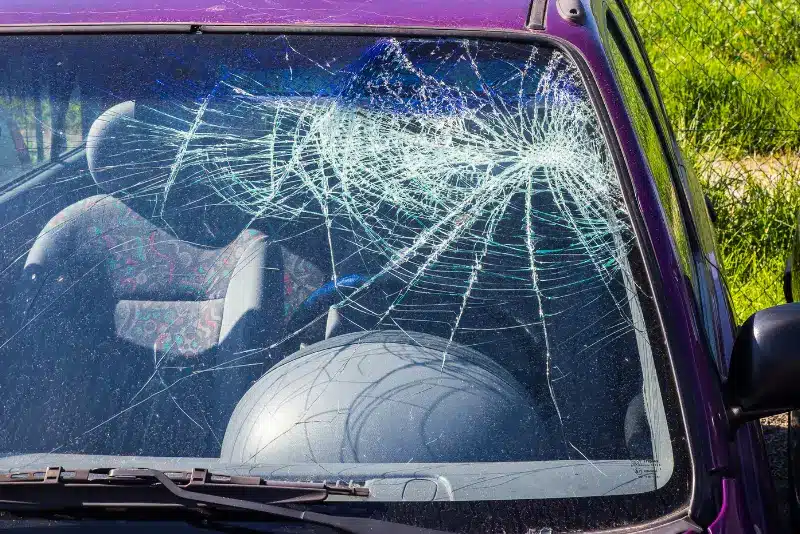
TL; DR: In this blog, you will learn what to do after a car accident, the six steps that protect your claim, and how Matthew Blair can help you understand your options.
Your heart is pounding. Your hands are shaking. Metal is crumpled where your bumper used to be. What do you do first?
That question matters more than most people realize. What to do after a car accident is not just a checklist. It is the difference between a fair settlement and a fight you didn’t need to have. One wrong move in the first ten minutes can shrink your payout by thousands of dollars, weeks before you even file a claim.
You do not need a law degree to protect yourself. You just need to know the moves that matter most, and the mistakes that quietly drain your compensation. Ever wonder why some accident victims walk away with a fair check while others get lowballed for the same injury? The answer often traces back to what happened in the first 72 hours. Matthew Blair helps California accident victims understand their rights, avoid common mistakes, and take the right steps after a crash.
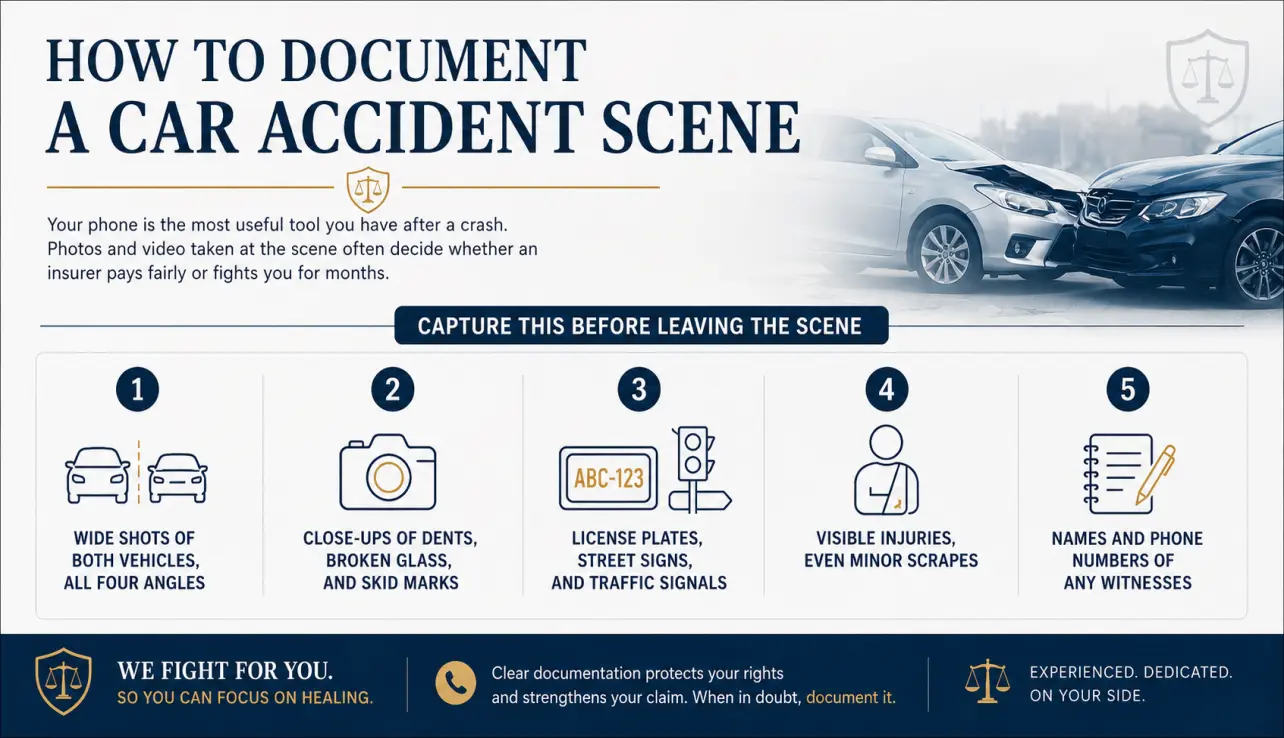
1. How to Document a Car Accident Scene
Your phone is the most useful tool you have after a crash. Photos and video taken at the scene often decide whether an insurer pays fairly or fights you for months.
The Insurance Information Institute recommends documenting the scene by photographing vehicle damage, collecting contact information from everyone involved and witnesses, and recording details such as the accident location, time, and weather conditions.
Capture this before leaving the scene:
- Wide shots of both vehicles, all four angles
- Close-ups of dents, broken glass, and skid marks
- License plates, street signs, and traffic signals
- Visible injuries, even minor scrapes
- Names and phone numbers of any witnesses
2. Why You Should File a Police Report
Calling the police feels obvious in a serious crash. But even in a fender bender, skipping this step is one of the costliest mistakes drivers make.
California requires it. State law requires drivers to file a Report of Traffic Accident, known as the SR-1, with the DMV within ten days if the crash caused injury, death, or more than $1,000 in property damage, according to the California DMV’s official accident reporting page. This applies regardless of fault and is separate from any report a responding officer files. Miss it, and the DMV can suspend your license, on top of weakening your claim.
A police or SR-1 report becomes an official, timestamped record insurers cannot easily dispute. Without one, the other driver’s version of events can quietly become the only version on file.
3. What Happens Legally After a Car Accident?
Once the dust settles, California law starts working in the background, and one rule can shape your entire payout.
California follows “pure comparative negligence,” a principle from the landmark 1975 California Supreme Court case Li v. Yellow Cab Co., which replaced an older rule that blocked recovery entirely if a victim was even slightly at fault. The full opinion is available through Justia. You can still recover damages even if you were partly responsible, though your percentage of fault reduces your payout.
Insurance adjusters know this rule well. Assign a driver even 20% of the blame, and the settlement can be reduced by 20%, making it important to challenge an unfair fault assessment when the evidence does not support it.
Matthew Blair represents clients in a range of accident cases, including car accidents, motorcycle accidents, truck accidents, bicycle accidents, and pedestrian accidents. His website lists these and his other practice areas, so you can see the types of cases he handles and the legal issues he focuses on.
4. Is It Necessary to See a Doctor Immediately?
Yes, seeing a doctor as soon as possible after a car accident is important, even if you do not feel seriously injured. Adrenaline can temporarily mask pain, and some injuries may not become obvious until hours or days after a crash.
A medical evaluation creates a record of your condition after the accident and can help identify injuries that may need treatment. Following your doctor’s recommendations and keeping records of your visits, tests, and treatment can also help document how the accident affected you.
Waiting too long to seek medical care can give an insurance company a reason to question whether the crash caused your injury. Getting evaluated promptly helps establish a clearer connection between the accident and your injuries.
5. Do I Need a Lawyer after an Accident?
You do not always need a lawyer after a car accident. If the crash was minor, fault is clear, and your injuries and damages are limited, you may be able to handle the insurance claim yourself. However, a lawyer can be especially helpful when you have serious injuries, disputed fault, significant medical bills, or an insurance company that is challenging your claim.
Insurance companies have adjusters and legal teams working to protect their interests. Having legal guidance can help you understand what your claim may be worth, deal with the insurance company, and avoid mistakes that could affect your compensation.
Matthew Blair handles personal injury and accident cases and can help you understand your legal options after a crash. His practice areas include car accidents and other accident-related cases, with his full range of legal services listed on his website.
6. How Long Do I Have to File a Claim?
Here is a mistake that can cost people everything, not just some money: waiting too long.
Under California Code of Civil Procedure section 335.1, injury victims generally have two years from the date of a car accident to file a lawsuit. Miss that window, even by a single day, and California courts will almost always dismiss the case, regardless of the evidence or injury severity. Property damage claims get a three-year window, but the injury clock does not bend.
Two years sounds like plenty of time. It rarely is. Treatment, negotiations, and everyday life eat up months faster than expected, and once the deadline passes, leverage with the insurance company disappears with it.
Frequently Asked Questions
What is the first thing I should do after a car accident?
Check for injuries, call 911, and move to safety if possible. Once everyone is safe, start taking photos before anything gets moved.
Do I still need a police report if the damage looks minor?
Yes, always. Minor damage today can turn into a real injury claim next week, and without a report, there is no official record to rely on.
How soon should I see a doctor after a crash?
As soon as possible, ideally the same day. Waiting gives insurance companies room to argue the injury came from somewhere else.
Is it hard to pursue a claim if I was partly at fault?
Not necessarily. California allows recovery even when fault is shared; the payout is simply reduced by the assigned percentage, which is why an unfair percentage is worth challenging.
What can a free consultation actually tell me?
It can clarify your rights and outline what a fair claim process typically looks like, with no obligation attached.
What happens if I miss the filing deadline for my claim?
In nearly every case, the court dismisses it entirely, regardless of how strong the evidence is.
Can I still file a claim if the accident happened months ago?
Often yes, since California generally allows two years, but acting sooner preserves more evidence and witness memory.
Key Takeaways
- What to do after a car accident starts with documenting the scene, including photos, vehicle damage, road conditions, and witness information.
- Follow California’s accident-reporting requirements and file the DMV’s SR-1 form when required.
- See a doctor as soon as possible after a crash to identify injuries and document your condition.
- California’s pure comparative negligence rule allows you to recover compensation even if you were partly at fault, although your compensation may be reduced.
- A lawyer can help when you have serious injuries, disputed fault, significant damages, or an insurance company challenging your claim.
- California generally gives injury victims two years to file a personal injury lawsuit, so waiting too long can put your claim at risk.
Understanding Your Options after a Car Accident
Most people do not lose out because their case was weak. They lose money because nobody explained what to do after a car accident before the clock started running.
Document the scene. File the report. See a doctor. Understand the law. Learn what a consultation can tell you. Watch the calendar. Six steps and each one helps protect compensation that may rightfully be yours.
At Matthew Blair, we help injured Californians understand these steps and their legal options. Whether the injury happened in a car accident, a motorcycle accident, a truck accident, or as a pedestrian or bicyclist, we know how insurance companies evaluate claims and where victims are often shortchanged. For injuries involving whiplash or neck pain, spinal cord damage, or the loss covered under wrongful death claims, we pursue the compensation our clients deserve.
Contact us so that we can work for you to give you what you deserve legally.